
Four spotted coconut weevil
Overview
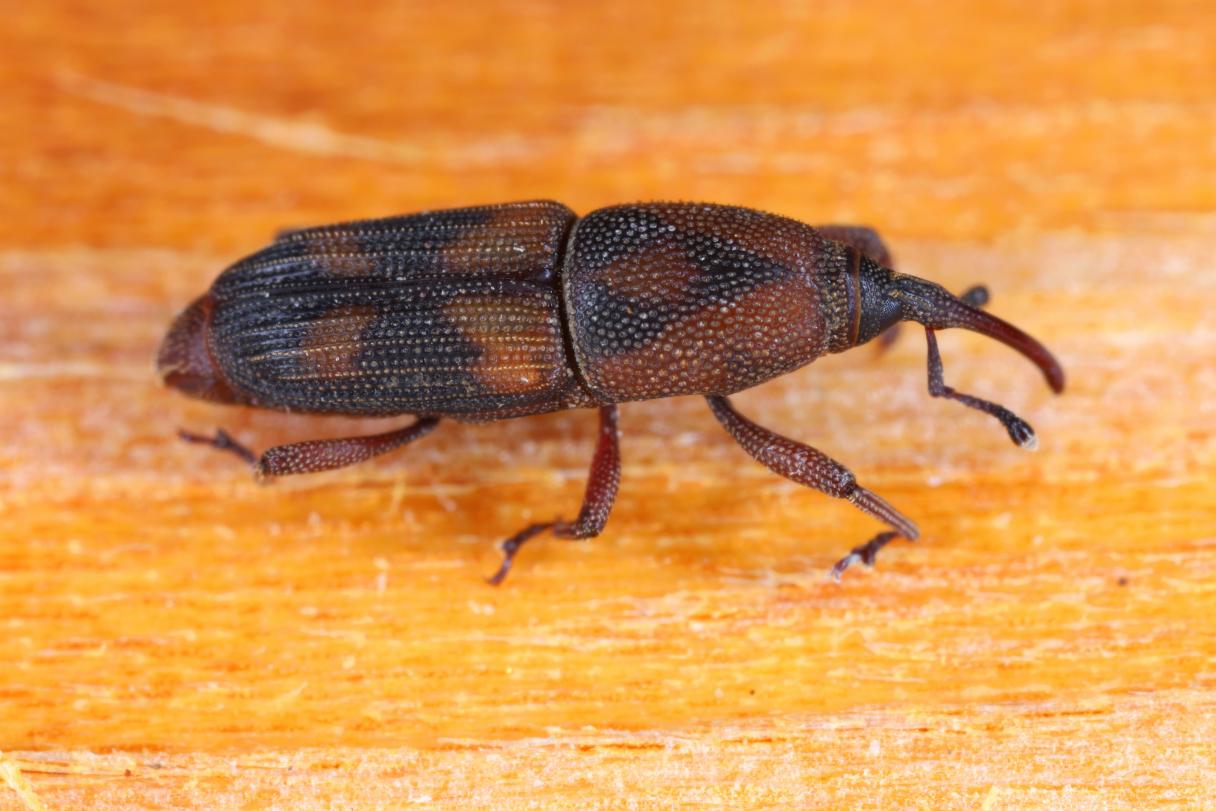
The four-spotted coconut weevil is a small but destructive pest affecting ornamental palms, particularly in tropical and subtropical regions. This dark brown to black beetle, measuring just 6-9 mm in length, gets its name from the four distinctive yellowish spots on its wing covers. Despite its small size, the weevil causes significant damage through larval feeding in palm crowns and stems. While originally associated with coconut palms, it has adapted to attack various ornamental palm species including sago palms (Cycas spp.), queen palms (Syagrus romanzoffiana), and pygmy date palms (Phoenix roebelenii). The pest particularly threatens smaller ornamental palms and young specimens in landscape settings. In Europe, mostly affecting Canary palms (Phoenix canariensis)
Geographic Distribution
Native to tropical regions of the Americas, the four-spotted coconut weevil has spread to palm-growing areas across the Caribbean, Central America, and parts of South America. It has also been detected in Florida and other southern U.S. states where ornamental palms are common in landscapes. The pest has established populations in various Pacific islands and has been intercepted in shipments to other regions, though its distribution is not as widespread as some other palm pests. Its preference for warm, humid conditions limits its range, but climate change may enable further expansion into previously unsuitable areas. In Europe we find this pest exclusively in the Canary Islands (Spain )
Life Cycle & Damage
Adult females bore into palm tissue to create egg-laying chambers, typically targeting the crown area, leaf bases, or wounded tissue. Each female can lay several dozen eggs during her lifetime. The small, white, legless larvae that emerge feed within the palm's soft tissues, creating tunnels and galleries as they develop. The complete life cycle from egg to adult takes approximately 2-3 months under favorable conditions, allowing multiple generations per year in tropical climates.
Damage occurs primarily through larval feeding, which destroys growing tissue in the crown and can girdle stems of smaller palms. The feeding activity also creates entry points for secondary infections by fungi and bacteria, which can accelerate palm decline. Symptoms include yellowing and wilting of fronds, premature death of new growth, and browning of the crown. In smaller ornamental palms, heavy infestations can cause the entire crown to collapse. Affected palms may show oozing of sap or frass from feeding sites, and the damaged tissue often develops a foul odor as secondary decay organisms colonize the wounds.
Detection & Monitoring
Early detection of four-spotted coconut weevil can be challenging due to the insect's small size and the internal nature of the damage. Regular inspection of ornamental palms should include careful examination of the crown area, leaf bases, and any wounds or pruning sites. Look for small bore holes (approximately 2-3 mm in diameter), accumulations of fine sawdust-like frass, and darkened or wet areas around the crown that may indicate active feeding.
Adult weevils are often most active during warmer months and may be spotted walking on palm fronds or around the crown during inspections, particularly in early morning or late afternoon. Because the pest often infests stressed or wounded palms, pay special attention to recently transplanted specimens, palms with mechanical damage, or those growing under suboptimal conditions. Smaller ornamental palm species appear particularly vulnerable and warrant closer monitoring in areas where the pest is known to occur.
Management & Treatment
Effective management of four-spotted coconut weevil begins with maintaining palm health and vigour, as stressed trees are more susceptible to attack. Avoid unnecessary wounding of palms and ensure proper cultural practices including appropriate irrigation and nutrition. When pruning is necessary, treat cut surfaces promptly and sanitize tools between trees to prevent pest spread.
For infested palms, systemic insecticides applied as trunk injections may provide control, particularly when applied early in the infestation. Contact insecticides can target adult weevils on palm surfaces but require thorough coverage and may need repeated applications to be effective. In landscape settings with high-value ornamental palms, preventive applications during peak weevil activity periods may be warranted in areas with known infestations.
Severely infested palms where damage has compromised structural integrity, should be removed and destroyed to eliminate breeding sites and prevent spread to nearby palms. All removed material must be disposed of properly through chipping, burning, or deep burial. When introducing new ornamental palms to a landscape, inspect them thoroughly and consider quarantine periods to ensure they are not carrying hidden infestations. Sanitation—removing dead fronds and plant debris from around palms—reduces potential breeding and hiding sites for adult weevils.