
Palm Moth
Overview
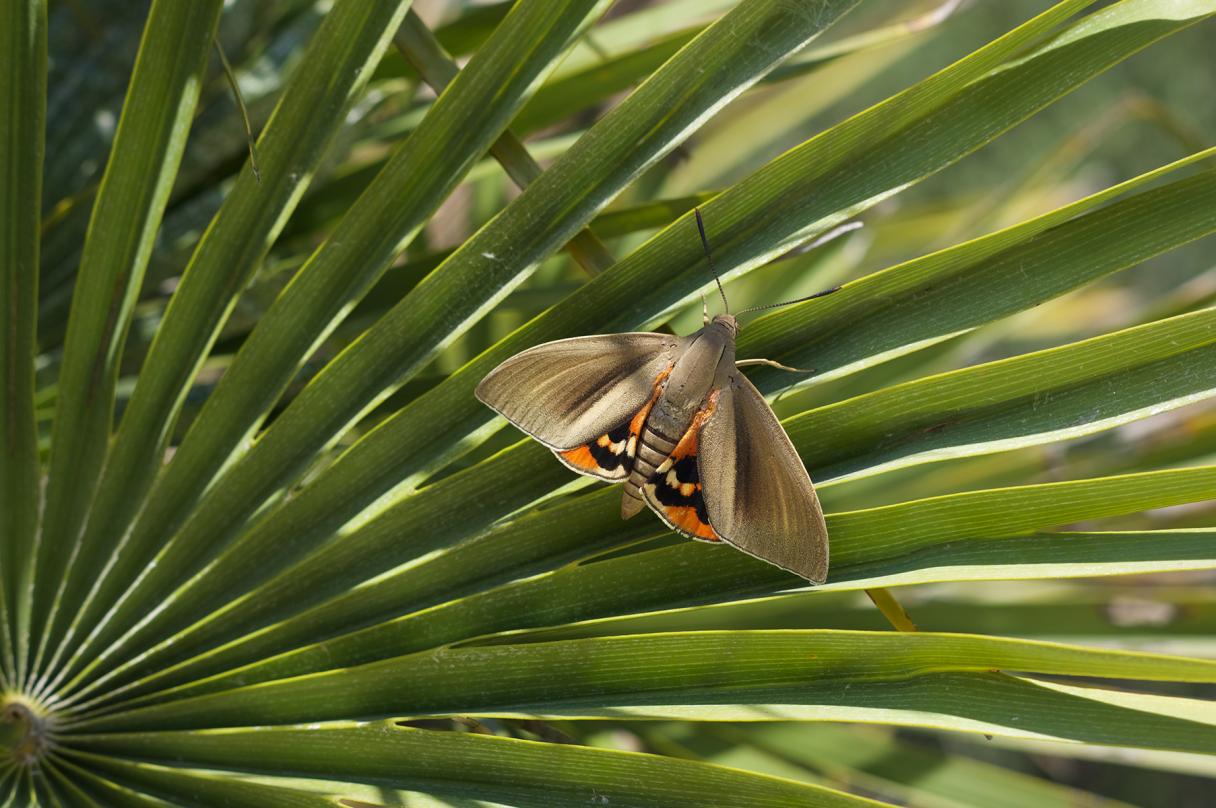
The palm moth, also known as the Castniid palm borer, is a large day-flying moth that has emerged as a serious threat to ornamental palms in Europe and the Mediterranean region. Native to South America, this striking insect—with a wingspan reaching 9-11 cm and distinctive orange and black markings—might be mistaken for a butterfly due to its colorful appearance and diurnal habits. Despite its attractive exterior, the palm moth's larvae cause severe internal damage to palm trees. The pest primarily affects ornamental species including Canary Island date palms (Phoenix canariensis), Chinese windmill palms (Trachycarpus fortunei), date palms (Phoenix dactylifera), and Washington palms (Washingtonia spp.).
Geographic Distribution
Originally confined to Argentina and Uruguay in South America, Paysandisia archon was first detected in Europe in the early 2000s. It has since become established across much of the Mediterranean Basin, with confirmed populations in Spain, France, Italy, Greece, and parts of southern Switzerland. The moth's presence has also been reported in Portugal and various Mediterranean islands. Unlike the red palm weevil, the palm moth has spread more slowly, but its range continues to expand northward as climatic conditions allow. The pest poses a particular threat to the ornamental palm industry and urban landscapes where palms serve decorative and cultural significance.
Life Cycle & Damage
Adult female moths deposit eggs individually on palm fronds or in leaf axils, with each female laying 150-200 eggs over her lifetime. The eggs hatch into caterpillars that bore into the central growing point of the palm, creating extensive galleries as they feed on internal tissue. Larvae can grow up to 8-9 cm in length and are cream-colored with a distinctive brown head capsule. The development from egg to adult typically takes one year, with larvae spending most of this time hidden within the palm tissue, making detection extremely challenging.
Damage manifests as larval tunneling destroys vascular tissue and weakens structural integrity. Early symptoms are subtle—asymmetric growth of new fronds, small holes in leaf bases, or presence of fibrous frass (insect waste) mixed with sap around the crown. As infestation progresses, the central spear may wilt or emerge deformed, and the overall crown can become misshapen. In severe cases, extensive boring compromises the trunk's structural strength, leading to crown collapse or snapping of the trunk itself. The internal damage often far exceeds what external symptoms suggest.
Detection & Monitoring
Early detection of palm moth is notoriously difficult since most damage occurs internally before external symptoms appear. Regular visual inspections should focus on the crown and leaf bases, looking for boreholes (approximately 1-2 cm diameter), accumulation of fibrous material, or browning at the base of fronds. During flight periods (typically spring through early autumn in Mediterranean climates), watch for adult moths flying around palms, particularly during warm, sunny days.
Pheromone traps exist for monitoring adult populations, though they are less widely used than RPW traps. Careful examination of pruned frond bases may reveal larval galleries or pupation chambers. Because the pest has a long development period, symptoms may not appear until a year or more after initial infestation, making preventive monitoring especially important in areas where the moth is known to occur.
Management & Treatment
Managing palm moth requires persistence and vigilance, as no single control method offers complete protection. Prevention centers on minimizing egg-laying opportunities—protective netting placed over the crown during flight periods can physically exclude females, though this is most practical for high-value individual specimens rather than large plantings. Some practitioners apply insecticide-impregnated bands around the crown area during peak flight periods to deter oviposition.
Treatment of infested palms is challenging once larvae have entered the trunk. Systemic insecticides applied as trunk injections may kill young larvae before they penetrate deeply, but efficacy decreases as larvae mature and bore deeper. Endotherapy treatments show the most promise when applied preventively or at the very first signs of attack. In some cases, surgical removal of larvae is attempted by cutting away damaged tissue, though this is labor-intensive and risks further weakening the palm.
Severely damaged palms that cannot be saved should be removed and destroyed promptly to eliminate breeding sites. Chipping or burning of infested material kills all life stages. In areas with established populations, regular monitoring combined with preventive treatments may be necessary to protect valuable specimens. Cultural practices such as removing and destroying old frond bases where eggs might be laid can help reduce breeding sites, though complete removal of leaf bases may not be aesthetically desirable on all palm species.